Monday, September 23, 2013

CycleOregon - A Typical Day


Ready to go while others still have a bit of packing to do
Of course, the day begins by getting up. We are camping so we don’t just get up and hop in the shower, get dressed and go. I got up about 6:00, an hour later than the real early birds. Some of these early birds seem to have trouble understanding why we are here. One rider tried to roll into the next camp by 10:00 am. That way he got to the showers first and did not have to waste time waiting in line. But leaving in the dark and being too early to enjoy any of the stops along the way is the real waste of time in my humble opinion.

Early Morning Blues
After crawling out of my sleeping bag, I would grab my riding clothes for the day and make my way to the ‘Blue Rooms’ as we called the Port-a-Potties. Since I have a pup tent, having mistakenly picked up the wrong tent when I packed, there just is not enough room for me to change in the tent. After changing, I would go have breakfast which always included bacon or sausage, eggs, potatoes, mush ;-( , fruit, V-8 or orange juice, and coffee. At breakfast we got our copy of the daily Cycle Oregonian (the Oregonian is one of the sponsors) which included information about the ride, stops along the way, our destination, and a few stories about riders.

Tent and porter service means sleeping close to your neighbor
After breakfast, it was time to tear down the tent and pack up. For some reason this always took longer than I thought it should. Some riders purchased the tent and porter service which meant they did not have to deal with the tent. The upside is being able to just ride in and have your tent already set up and your bag waiting for you. The downside is sleeping cheek by jowl with your neighbors – literally as the tents are set up only inches apart. I talked to riders who could not avoid the snoring because the snorer’s head is almost touching yours from the other tent.  Ear plugs are on the what to bring checklist.
Fresh water for our bottles. The ingenuity amazes.
Once packed, we waited for a porter to pick up the bag and let us know what color to look for when we got to the next camp. Five trucks and five colors made it easier to find your bag, helpful since there are only so many bag styles. At least they aren’t all black like luggage on the airline carousels. The $2 expected tip for each porter was worth it and went to support local programs, most often at the local school.

On road help is just around the corner


Bikes go anywhere they can while we eat and drink
After a quick check of the bike, we took off for the ride. I tried to leave about 7:00, but riders would leave anytime between 5:30 and about 10:00. Leaving at 7:00 gave me plenty of time to stop along the way at the sights or just to take a picture. Each day’s ride has five stops: two water stops, two snack stops, and one lunch stop. In a sense this turns the ride into a series of 10-15 mile rides, all in one day. When you look at it that way, doing 70 miles a day is not such a big deal.
Ready for the night
At some point in the afternoon, we finish the ride. For me that was usually around 4:00. If you have the tent and porter service, now all you have to do is find your tent, numbered for convenience. For the rest of us, the first step is to find my bag and a porter to help me find a tent spot. I learned that I wanted a spot close to the main stage and fairly close to the toilets. Food, entertainment and the bathroom matter the most. I don’t want quiet and far away although for some that is the priority. I enjoyed the possibility or retreating to my tent and continuing to listen to the music.
Music by sunset


At 4:00 the entertainment starts on the main stage. Before dinner, it will be a local singer or group. After dinner, the headliner will be someone with more experience if not more reputation. Everyone I heard was someone I would go see again. At 7:30, the stage is taken over by CycleOregon for announcements and more. Leading off on this trip we had a cowboy poet who shared poetry and stories with us each evening. One more way that CycleOregon shows its connection to the local communities. Each evening we heard about ways that CycleOregon is sharing with the communities with its grants and connections. The highlight of every evening was Ken Chichester. Ken always shared a joke before he cajoled us about sharing the road with the drivers. Unfortunately, not all of us listened and we had a few riders who continue to give those drivers who hate cyclists reason to hate. Then Ken would share a bit about the route he had designed for us the next day. When Ken was finished, the band retook the stage until it closed at 9:30. Some returned to their tents. Others would stay to enjoy the music and the beer garden supported by Widmer or the wine provided by Eola Hills. Eola Hills even created a special label for Cycle Oregon – cases available to be delivered to John Day for pickup.
Just in case you forgot something or want a souvenir of the ride

Amenities available in camp

·         CycleOregon and Bike Gallery both had stores with clothing. Bike Gallery sold anything one might need from clothespins to Chamois Cream to tent pegs and insect repellent
·         Yoga, physical therapy and massage. Some of the massage therapists have been coming for years
·         Medical tent
·         Bike Gallery volunteers would fix anything on your bike for tips – only charging for parts
·         A support tent would answer any questions, find your lost items, and solve almost any problem you might have
·         Every local community had a tent with information about things to do and often items for sale
·         Local artisans often set up their own booths. I bought a Christmas ornament carved from a Juniper tree from a little girl at a card table
·         Nossa Familia Coffee opened their coffee shop at 5:00 every morning and served all day
·         At most stops a laundry option was a possibility - $10 for a grocery bag of laundry
·         A Portland group like Bike Clark County that works to help kids get into cycling and provides free bikes to kids who can’t afford on had a charging facility for electronics. They also detailed bicycles for a donation of $80. While that sounds expensive, I watched them work and decided (too late) that it was well worth the money.
·         I was most amazed by the ingenuity of the shower trailers. Semi-trailers outfitted with a dozen showers and dressing areas makes the logistics of providing showers a breeze.
·         The whole enterprise reminded me of what I read in Water for Elephants and saw at the Ringling Brothers, Barnum and Bailey Circus Museum in Sarasota, FL. Everything is torn down and set up ready for cyclists to arrive by about 2:00 in the afternoon every day. A town of 2500 people moves over 60 miles each and every day. No problem for these folks.

Saturday, September 21, 2013

CycleOregon - Day 1 - Strawberry Mountain Loop


I begin this with special thanks to Steve and Patty Palmer who shared some of my training rides. Unfortunately, Steve came down with a virus a week before the ride and was unable to participate this year. More thanks go to Maelynn and Bob Anderson and their friend Stacey who volunteered to give me and my bike a ride to John Day for the start of the ride. After about five miles on the first day, I never saw Bob again on a ride as he joined with a group much more suited to his faster speed. I did see Maelynn and Stacey often on the trail and we usually had dinner together to share the day’s experiences.
Camping on a baseball field in John Day
CycleOregon began in 1988 when some folks including Jonathan Nicholas of the Oregonian decided to emulate RAGBRAI (the ride across Iowa) and create something similar for Oregon. I remember reading about it and wishing that they were doing it in August instead of September so I could also participate. At the time I was riding a lot and would have been ready to do 500 or so miles in a week, especially when someone else takes care of ALL the logistics. Over the years, I had stopped riding much even after we moved into our condo with its beautiful riverside trail so inviting. Spring last year, I decided I needed to start riding again to get in some real exercise and this year figured I was ready to take on the challenge. The route this year also goes through one of my favorite parts of Oregon as it goes from John Day to Steens Mountain through some of the more interesting geological structures in the state and Malheur National Wildlife Refuge which is one of the most important stops on the Western flyway.

Our group arrived at the campsite about 4:00 pm after a nice drive up the Gorge and then down Hiway 395 along the John Day River. We would use 395 on four different days of our trip. After setting up camp, we explored the set-up, had dinner, and listened to Etoufee (or is it A2Fay?), a fun Louisiana Blues group. We were camped on the lush lawn of the baseball field.

John Day is one of eastern Oregon’s interesting small towns. The John Day River is protected by both Oregon and national scenic rivers acts and is the gateway to both the beautiful Strawberry Wilderness and the John Day Fossil Beds National Monument and the Painted Hills. The town is also the site of the Kam Wah Chung Museum. The museum memorializes the life of Ing Hay, Chinese doctor who cared for people of the area until the 1950s using traditional Chinese medicine.
On the road to Prairie City

Prairie City
Selling lemonade can be profitable with the right location

Today’s ride started with a slight uphill climb to Prairie City where we turned off Hiway 26 to climb almost 2800 feet  following the John Day River as it flows out of the Strawberry Wilderness. While the ride was not easy, we did enjoy the gurgling sound of the river as it flowed beside us. Our first food stop included music and coffee from Trailhead Coffee Roasters a pedal powered coffee shop. Earlier, we had been treated to an old-fashioned lemonade stop hosted by two young girls who probably earned $1000 that day as it seemed that most of the riders stopped to partake of their drinks.

Headwaters of the John Day River

Made it!
The route down was equally beautiful following the Malheur River from its source with a stop for lunch at Big Creek Campground.

Headwaters of the Malheur River
It helps to have the 75 mile route punctuated by two water stops, two snack stops and a lunch stop. All three food stops include local musicians so we can have a rest and enjoy the stop while we replenish our reserves.
Music at our rest stops

A most amazing coffee roaster on wheels
 Back in camp, a cool shower, dinner, a beer (or two) and more live music prepare us for a good night’s sleep and another long ride tomorrow. We also have massage and physical therapists to help restore the body. It also helps that Bike Gallery has donated several mechanics to take care of any repairs our bikes might need.

Tuesday, April 30, 2013

Grays Harbor Shorebird Festival


Great weather at Bottle Beach
 Over the weekend I attended the Grays Harbor Shorebird Festival for the fifth time. They offer tours, a keynote speaker and a few vendors. We bought our first pair of Vortex binoculars from the Backyard Bird Shop in Gig Harbor at the first festival we attended. We like them so well we bought a second pair and a scope from Vortex in following years. 
Immature Bald Eagle at Tokeland Harbor
This year I took tours to the Westport area and Quinault, and on Sunday took advantage of hands-on help from the keynote speaker, Clay Taylor, Swarovski’s digiscoping expert. No new birds this trip, but we did get some great views of many of the shorebirds and even a few others. The marginal weather this year dampened things a bit, especially on the Saturday trip to Quinault.

Sandpipers in the lee of the hummock as the tide comes in


No Peregrine, but something spooked the birds
Grays Harbor is one of the most important stops on the Pacific Flyway as millions of shorebirds fuel up on their way to their Arctic breeding grounds. On Friday, we took a yellow school bus to Westport and the nearby villages of Grayland and Tokeland. Fortunately, I did not have to share my seat. School buses are not really built for tall adults. The highlight of this tour is Bottle Beach, a few miles east of Westport. A nice new boardwalk leads to a blind overlooking the beach although the best way to view the birds is to get there about two hours before high tide, stake out a nice sandy spot on the gentle sloping beach and wait for the tide to push the birds to you. I have watched really well-prepared photographers let the water come up and around them to get what must be fabulous close-ups of the birds as rising tide forces them closer and closer. Even our larger group did not scare the birds as we managed to stay quite still and quiet. While the peregrines did not spook the birds on this trip, they can create a good deal of excitement and great pictures of shorebirds blasting off to avoid the danger.

Dunlin in breeding plumage
Dunlin not ready for prime time
Short-billed Dowitcher
Saturday, a much smaller group of ten rode in the Lake Quinault Lodge van with one of their guides and two other leaders to the Quinault Rain Forest. Unfortunately, the rain forest lived up to its name causing many of the birds to be quieter and more elusive.  Nevertheless, we were able to get some good views of a pair of dippers and Bunch Falls and some other fairly rare birds including an Evening Grosbeak and Purple Finch. We took a short walk along the lake shore leaving from the Lodge which took us right past the spot where I lived when I started elementary school. The condemned house we lived in has been replaced by a newer model retaining its great view of the lake and short walk to the water where I remember learning to float as Dad and I went down there nearly every evening in the summer while Mom cooked dinner for the four of us. I learned to swim the next summer in the pool at Concrete High School. As those of us who live in the Northwest know, summers are usually warm and sunny most of the time. The rain record at the lodge showed rainfall to be over 20” most of the winter months, but under 5” during the summer. The winter we lived there (1955-56) the rainfall was typical, but the timing must have been unusual because the lake rose about ten feet coming within a couple of feet of flooding our house. It did rise enough to creep into the garage.

Can you find the Dipper. These small gray birds love water like this where they wander the rocks in the rushing water to catch bugs and small fish being washed down stream. The nest is often hidden behind rocks or under logs in midstream.
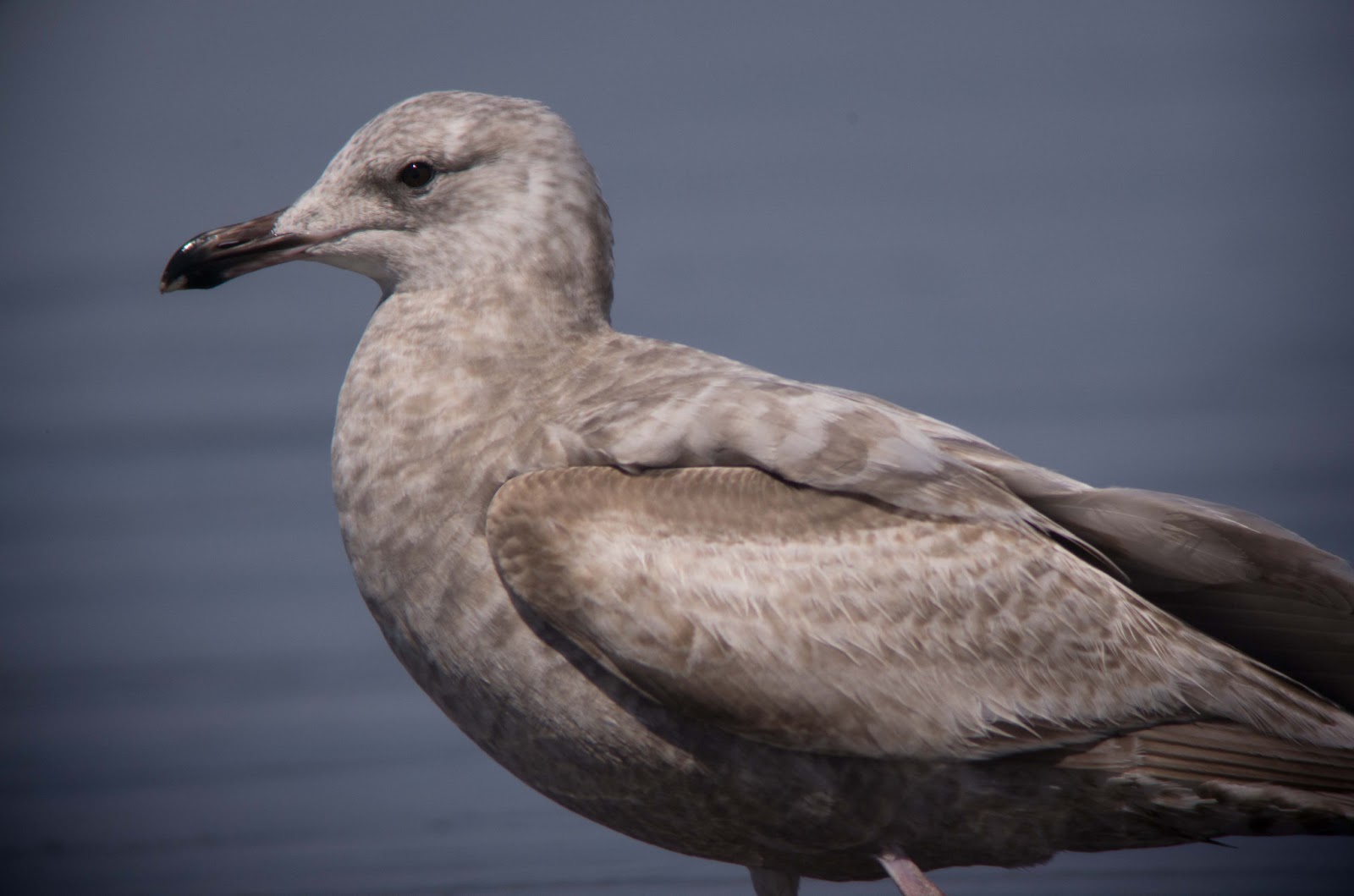
Sunday, I spent a few hours with the digi-scoper, learning more about how to make use of the scope as an extra-long lens for photography. The last few pictures show how amazing the results can be. It took us an hour of exploration before we found a suitable site on the beach for the pictures. But finally, we did arrive at a spot where the sun was on the right side of the birds and we could get in some guided practice. Gulls, Marbled Godwits, and Western Sandpipers provided the subjects.
Western Gull
Immature Western Gull
Marbled Godwit and Semipalmated Plover with Western Sandpipers in the background

Sunday, March 31, 2013

Harlaxton Manor - Interior


Shortly after our arrival we were given a tour of the manor. You can imagine that it was fun reminiscing and trying to figure out how things had changed since we were there in 1969. As you can see from the pictures, the restoration work is of the highest quality. The biggest changes in the areas pictured here are the vibrancy of the colors and the time and effort that has gone into maintaining the cleanliness and beauty of the building. All of the elements were there in 1969, but the overall tone was much more dingy, shall we say. Probably the two biggest changes don’t show up here. First, the insulation weather-stripping mean that the building is warm and no longer drafty. Second, the layout of the student rooms has changed significantly. I could find no hint of the six-person room I lived in or the bathrooms we used down the hall somewhere.  

The old elevator remains as it was. Close both doors or it won't go anywhere.
Here we are marveling at the renovations.
The main cedar staircase
The railing above the top of the staircase is not accessible.
Imagine trying to keep this amazing stucco work clean. It's no wonder that many of these great old buildings fell into disrepair and are now open to the public to pay for their upkeep.
The great hall where we had our final banquet. I think this was a study area.
These are on the left in the picture above.
The upper wall and ceiling.
The entrance to the long gallery.
The Long Gallery. One of the two hidden staircases is in this room. They were used by servants. Sorry, no ghost stories here.
This fireplace is on the left side of the picture above.
One of the Conservatory windows. This room was perhaps in such disrepair that we did not have access.
I remember using these nooks as quiet study areas.
The library
The Gold Room. If you look carefully, you can see the cherub climbing down from the ceiling.
The Gold Room
The Gold Room Ceiling
Gold Room Detail
The ceiling in the state dining room.
Our bedroom this trip. On the top floor where the professors and families has exclusive access.